

The session
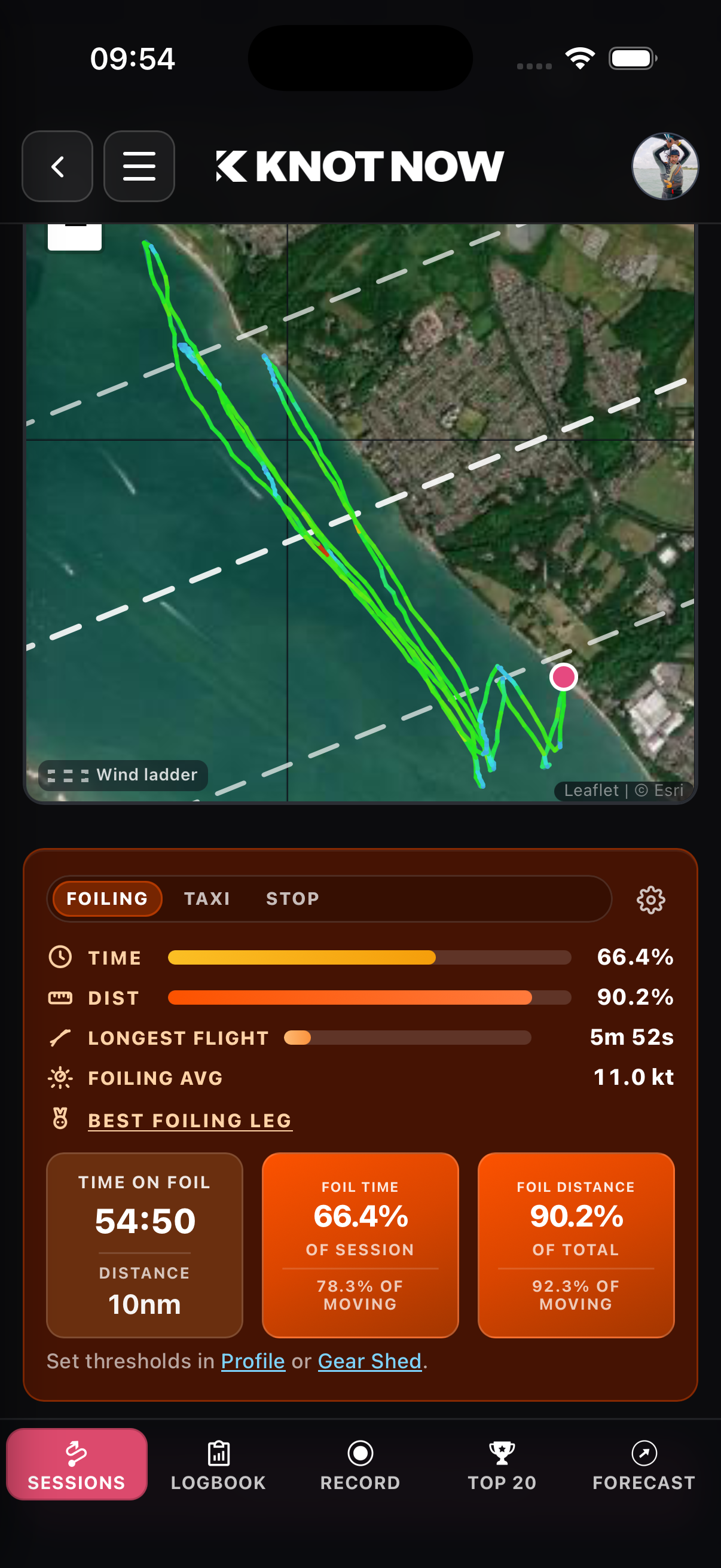
On the foil, and the walk back.
Foil time and foil distance - based on the entire session and the time you were actually moving. Catching your breath on the pebbles or chatting between runs won't drag your flying stats down. When you rest, you don't wreck your foil time percentage.

Beginner progression
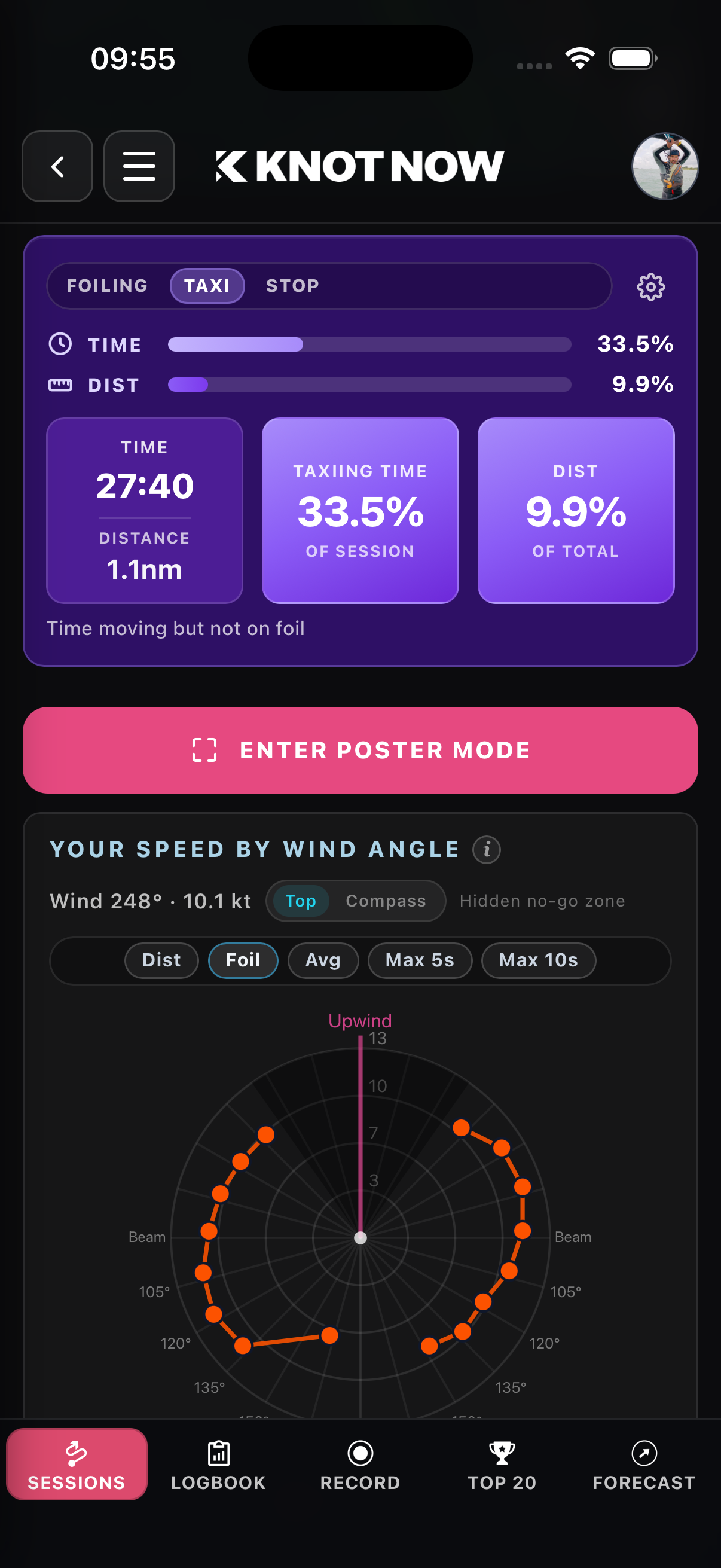
Own the walk of shame.
Dropping downwind is how everyone learns to stay up. You know you walked back up the beach, but do you know how far?
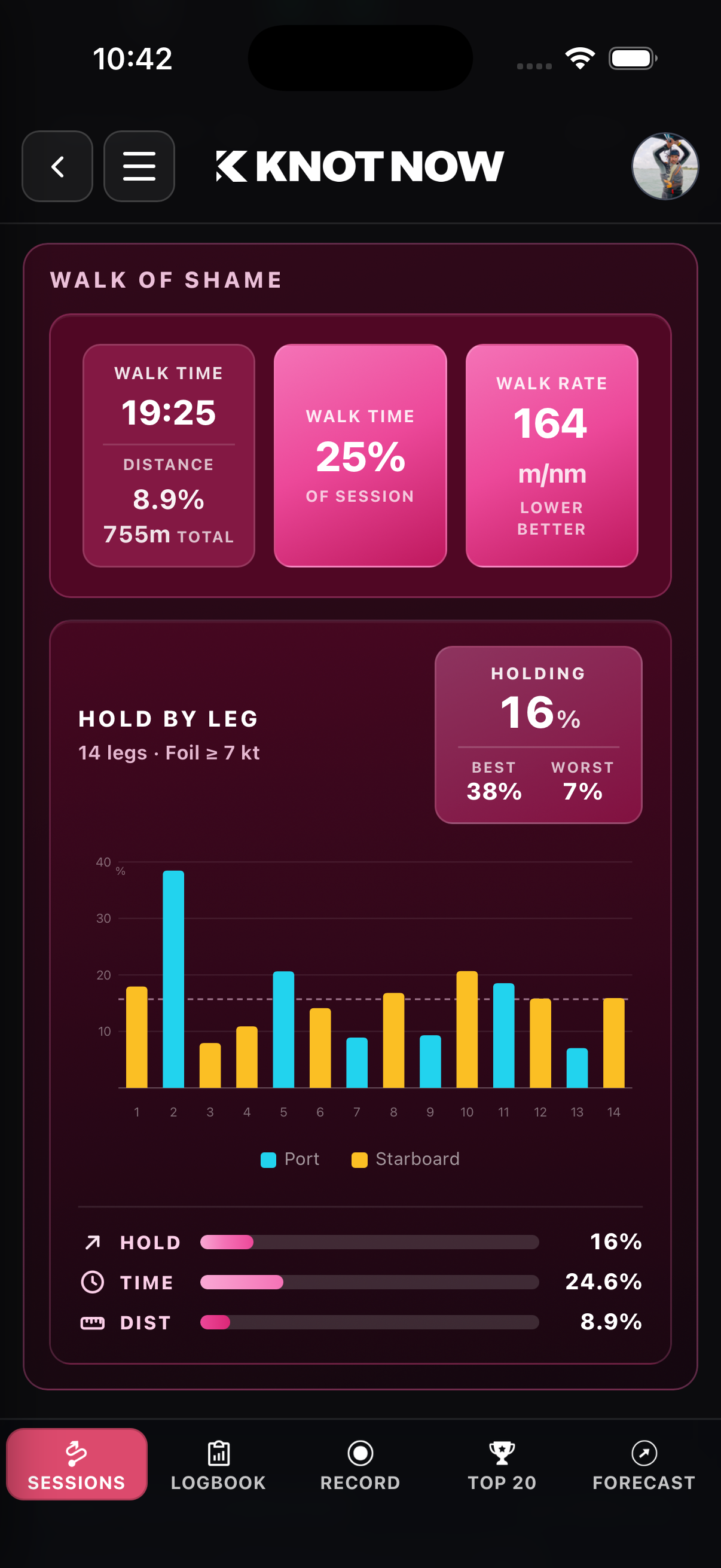
Seeing your walk time, distance, and your rate per nautical mile shrink over the season is the ultimate confidence booster. Compare today's session to last month's and watch the proof stack up: you're holding ground better, pointing higher, and spending less time dragging your gear through the shingle.
- Upwind hold rate The percentage of the session where you genuinely held against the breeze.
- Walking rate Metres walked per nautical mile.
- Timeline markers When you were walking back, set against when you were out on the water.
Waves and swell
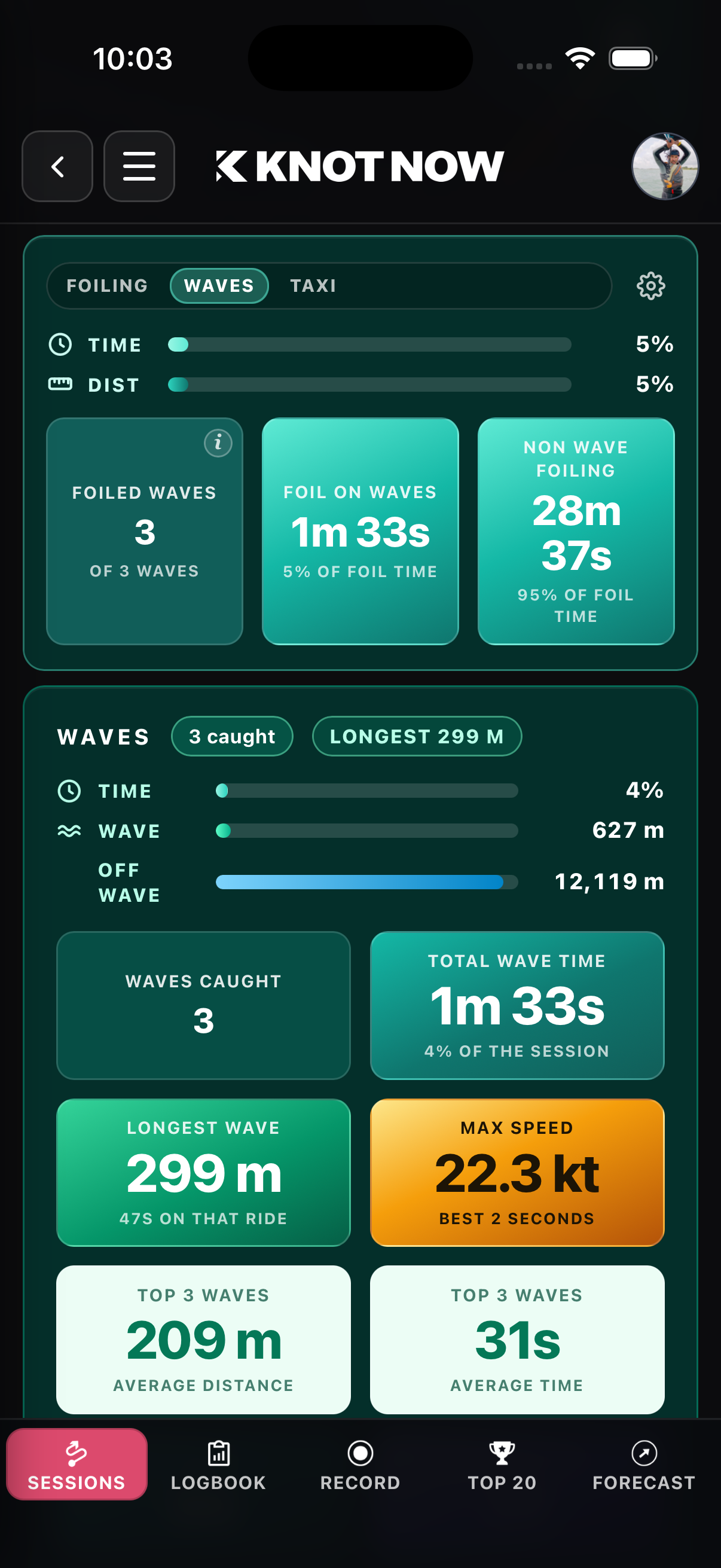
Check your waves surfed while on foil
Paddling out isn't surfing, and taxiing isn't flying. See every caught wave, your speed carving down the line, and your flight time.
Across sessions
The numbers that tell the season's story.
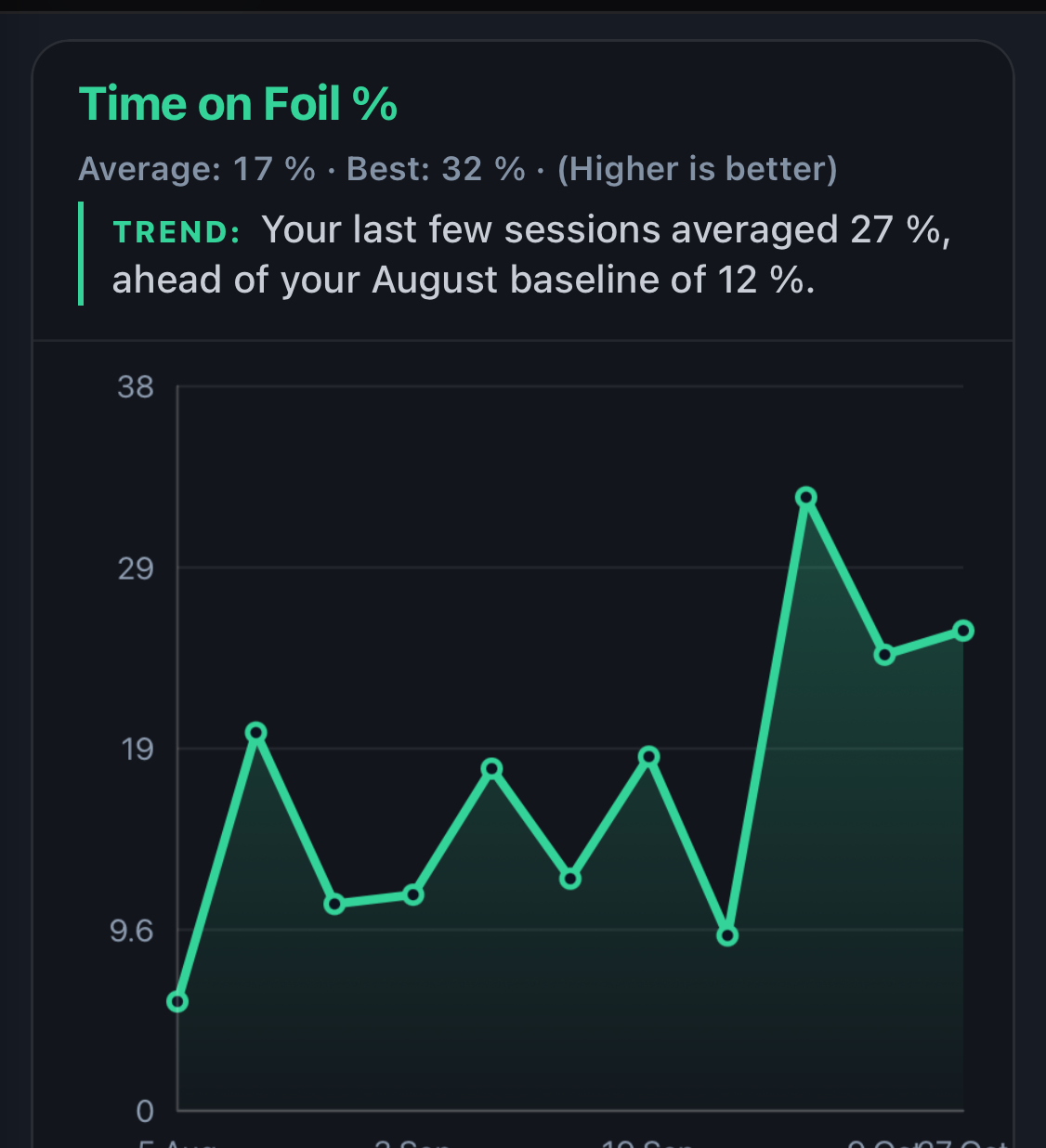
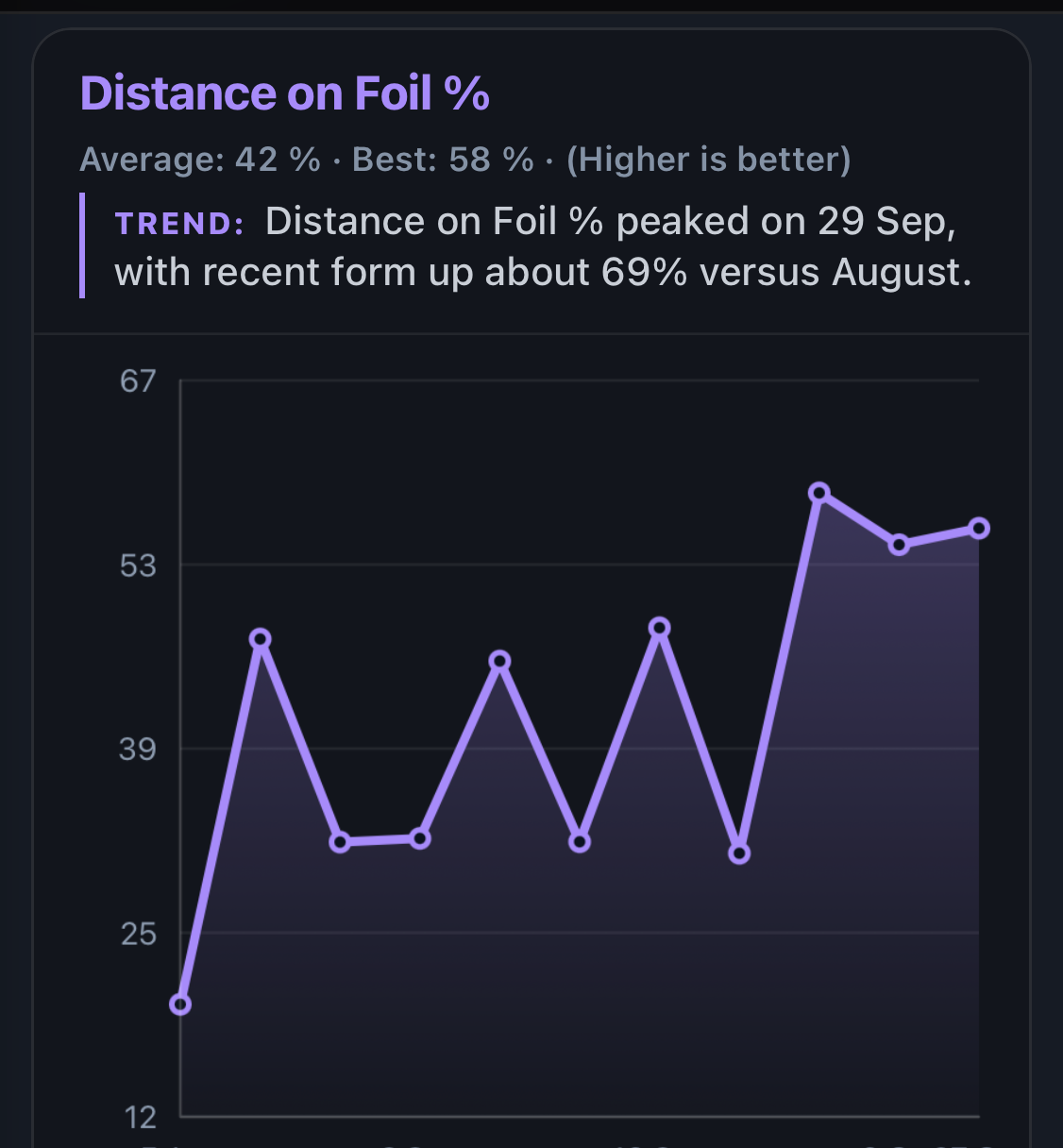
One great run feels brilliant. A whole season of them on a chart proves you're dialling it in.
The logbook tracks your flight time and distance across any date range you pick. Compare your recent sessions against where you were six months ago, track your personal bests, and see which front wing has spent the most hours in the air.
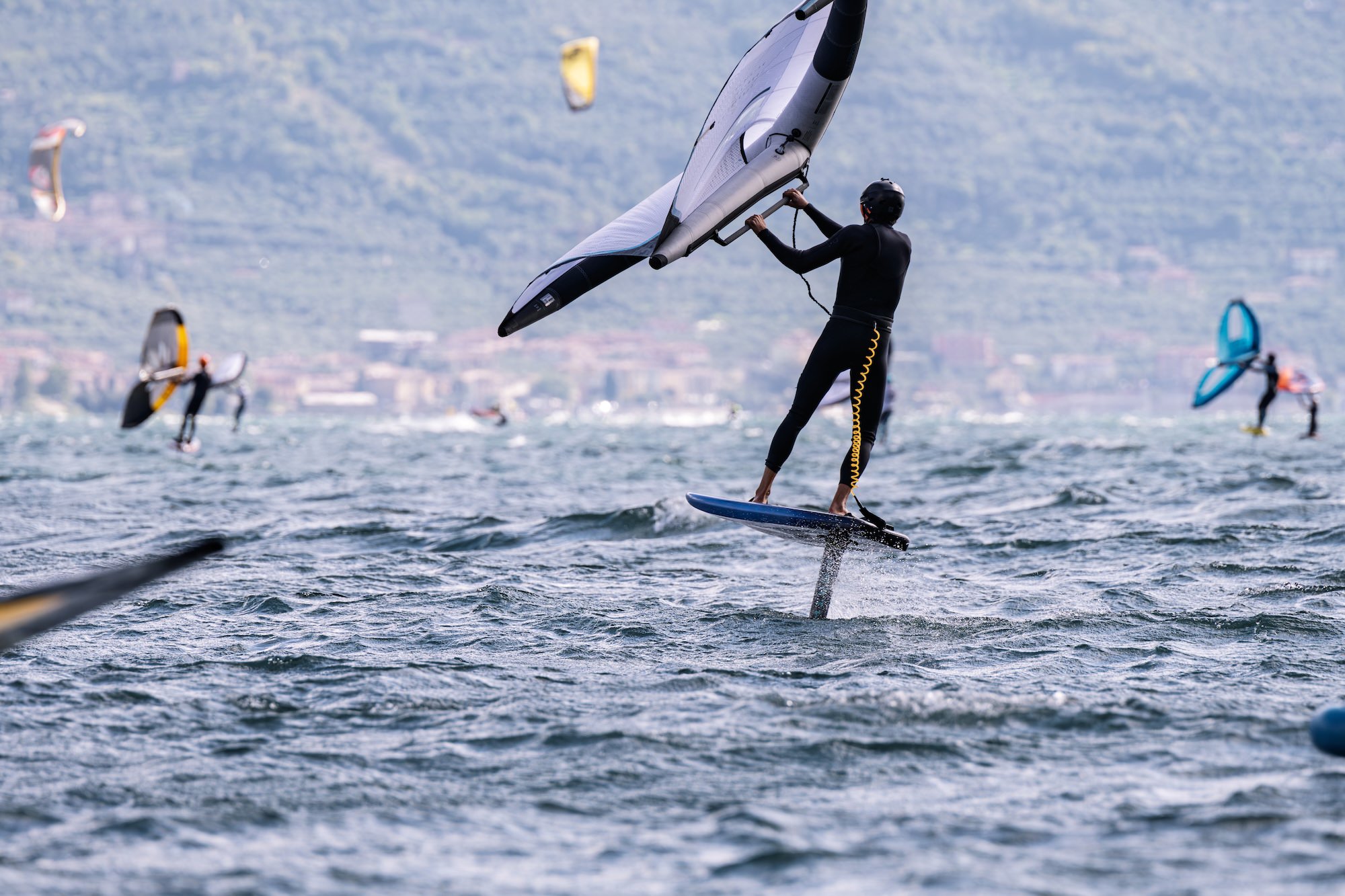
Performance
Legs, speed runs, and Alphas.
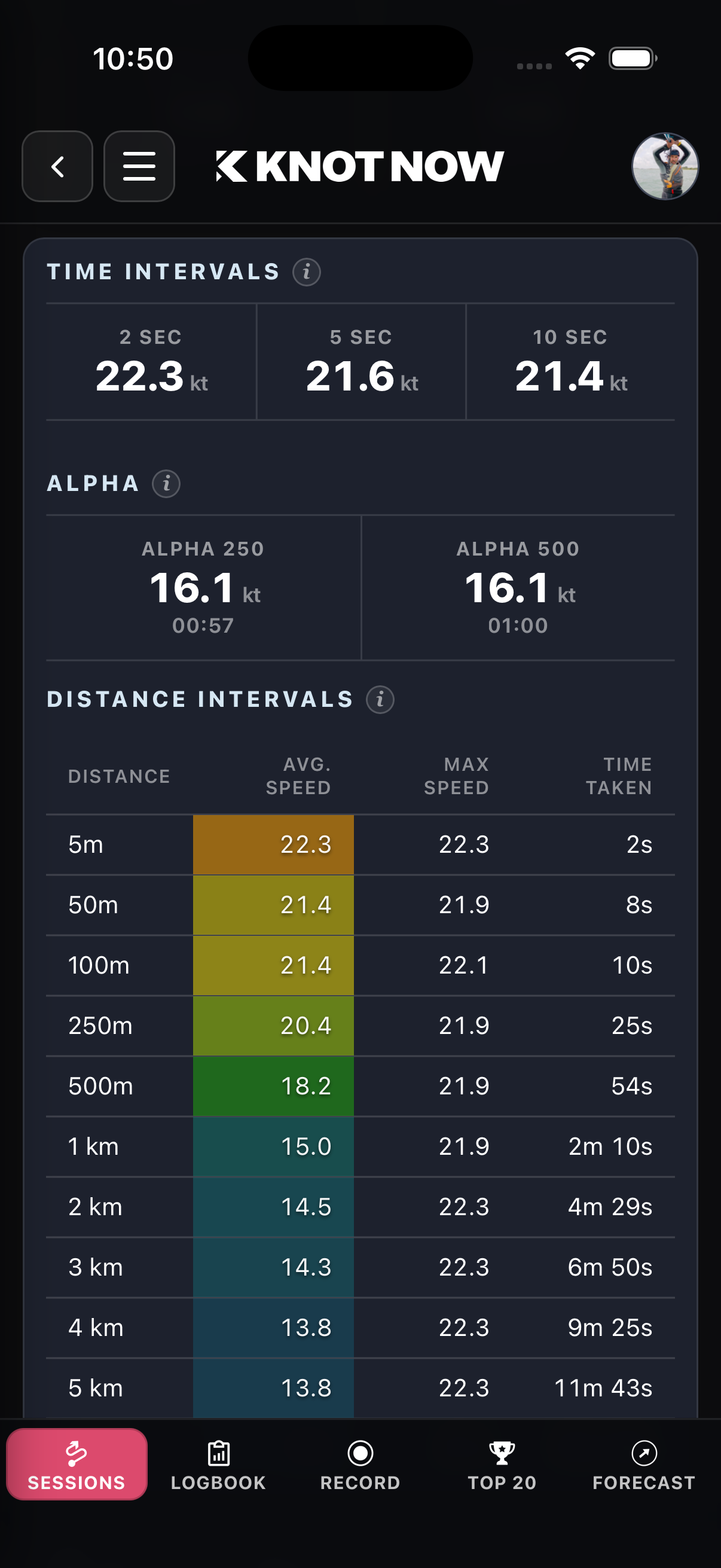
Best foiling leg, then the run that comes back. KnotNow cuts out the drift and measures your best single flying stretch: duration, distance, average pace, foil percentage, and your peak 5-second burst.
Questions
How does KnotNow measure time on foil?
KnotNow gives two figures: foil time as a share of the whole session, and as a share of the time you were moving. Resting on the beach does not drag the moving-time figure down. You set the speed that counts as flying on each foil in the Gear Shed.
What does KnotNow count as the Walk of Shame?
Walk time, the distance you walked, and the metres walked per nautical mile, kept off your flying stats. You also see how much of the session you held upwind.
Can I compare different foils and wings?
Yes. Log the board, wing and foil you used, or tag the session, then report on that kit. The logbook charts flight time and distance for the gear you attach. You name the gear. KnotNow does not ship a list of foil sizes.
What are Alpha 250 and Alpha 500?
Alpha 250 is your best average speed on a 250 metre run that finishes within 100 metres of the start. Alpha 500 is the same test over 500 metres, finishing within 50 metres of the start.